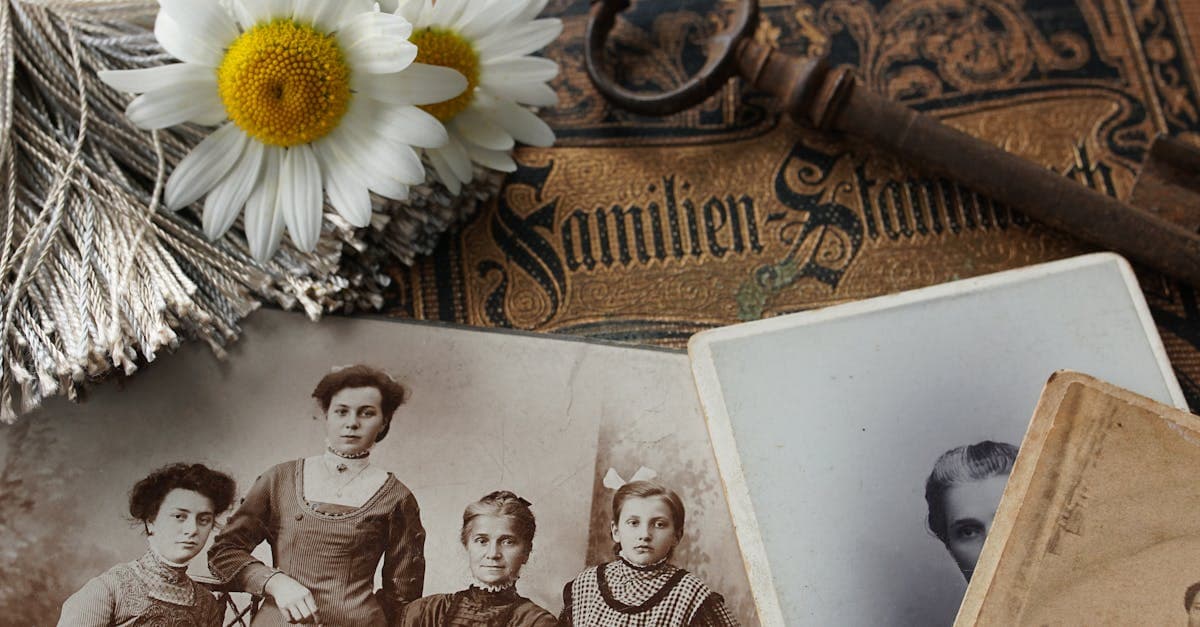
A daguerreotype isn't really a photograph in the way modern people think about photographs. It's a polished silver plate with a mirror finish, and the image only appears when you tilt it into the light at the right angle. Restoring one is a genuinely unusual task — the AI is never going to see what you see when you hold the plate in your hand, because a flat scan can't capture the directional mirror reflection. That's the honest starting point.
What daguerreotypes look like — convention and damage
The daguerreotype was the first commercially successful photographic process, announced in 1839 and dominant through roughly the late 1850s, when ambrotypes and tintypes began to displace it. The George Eastman Museum describes the process: a silver-plated copper sheet is polished to a mirror finish, sensitized with iodine fumes, exposed in-camera, and developed with mercury vapor (eastman.org). The result is a unique image with exquisite detail — daguerreotypes remain among the highest-resolution photographic objects ever made — sealed behind glass in a protective case.
Graphics Atlas notes the daguerreotype's defining visual trait: the image is only visible when viewed against a dark reflection, because it's essentially a positive read off a mirror surface. Tilt the plate one way and you see the portrait; tilt it another and you see your own face (graphicsatlas.org). This is not a quirk — it's the medium.
The damage patterns are specific to the silver plate and the cased presentation:
- Tarnish — a bluish, purplish, or yellow-brown ring creeping in from the edges of the plate, caused by silver sulfide forming on the surface. The Getty Conservation Institute notes this is the single most common form of daguerreotype deterioration (getty.edu).
- Cleaning damage from past owners who tried to polish the plate. The Getty is emphatic that historical attempts to clean daguerreotypes with silver polish or chemical dips have done catastrophic damage to many surviving plates.
- Glass cover deterioration — the sealed glass in the case can develop its own "weeping" or cloudiness that obscures the image underneath.
- Case damage — the cases themselves (leather, thermoplastic "Union cases," velvet lining) often come apart while the plate inside is fine.
- Physical scratches that cut through the image layer to the copper beneath.
The Library of Congress cased-photograph guide underlines that a daguerreotype should never be removed from its case or cleaned by a non-specialist — the risk of destroying the plate is real (loc.gov/rr/print/coll/251_ambro.html).
What AI can fix on a daguerreotype
Once you've got a scan or photograph of the plate — taken without removing it from its case, ideally — AI can do useful work:
- Tarnish haze and color cast across the image
- Overall low contrast from plate oxidation
- Dust and scratches from the cover glass and the plate
- Uneven tone from past cleaning attempts
- Recovery of facial detail that the tarnish has obscured
The limitation is larger than with any other photo type on this site: a daguerreotype scan is a flat, low-resolution capture of a three-dimensional mirror image. You are never going to match the detail you can see by tilting the real plate in hand. Restoration can make a flat scan look much better — cleaner, more legible, more contrasty — but it cannot recover the plate's actual optical quality. Think of the restored file as a useful reference image, not a replacement for the original.
Also: most daguerreotypes are mirror-reversed (like tintypes), and the subject may also have been posed formally in a way that looks stiff to modern eyes because of long exposure times. Neither of these should be "corrected."
Example restorations
An 1850s family patriarch portrait. A sixth-plate daguerreotype of a great-great-great-grandfather in a Union case, tarnish ring blue and heavy around the edges. Restoration can pull the face out of the haze.
An ambrotype-era transitional portrait. Some photographers worked in both daguerreotype and ambrotype, and families may have one of each. A daguerreotype from roughly 1855 with heavy tarnish and case damage is a common estate find.
A posthumous portrait or early child photo. A specific historical use — daguerreotypes were sometimes the only photograph a family had of a child who died young. These are enormously emotionally loaded, and restoration is often about making the face legible for descendants.
How to restore your daguerreotype
- Do not remove the plate from its case. Photograph or scan through the cover glass. Use a flatbed scanner if possible, or a camera on a tripod with a polarizing filter to cut reflection. Light from a large, diffuse source at roughly a 45-degree angle. 1200 DPI or higher.
- Upload at /restore. Expect the biggest improvement from tarnish and haze removal.
- Treat the output as a reference. For anything you care about — genealogical display, museum-style reproduction — consider also consulting a conservator for the physical plate. AI restoration of the scan does not replace conservation of the object.
Daguerreotypes belong to the 19th-century cased-photograph family with tintypes and ambrotypes. If your family's photographic record continues into the later 1800s, the next step is usually a cabinet card or a sepia photo. Credits work across all types.
Pricing: one $9.99/month plan, 40 credits, every tool unlocked, credits never expire, with a 7-day money-back guarantee. /pricing.
Sources
- Graphics Atlas identification page for daguerreotypes — polished silver plate, mirror-like surface, viewing-angle dependency
- Library of Congress guide to daguerreotypes, ambrotypes, and tintypes — discusses cased-photograph conventions
- George Eastman Museum on the daguerreotype process and its place in photographic history
- Getty Conservation Institute on daguerreotype preservation, tarnish, and cleaning challenges
More photo types we restore
Bring cracked, yellowed, or water-stained wedding photos back to life. AI restoration for album pages, studio portraits, and reception candids.

Rescue faded hospital baby pictures, studio portraits, and first-year snapshots. AI restoration for color shift, creases, and album damage.
Fix faded, yellowed, or orange-shifted Polaroids. AI restoration for SX-70, 600, and Spectra instant prints with honest limits.
Restore 19th-century tintypes with rust, scratches, or fading. AI-based recovery for ferrotype portraits from the Civil War era onward.
Ready to restore your photo?
Free preview, no account needed. Download it in full resolution with a free account.
Upload a photo