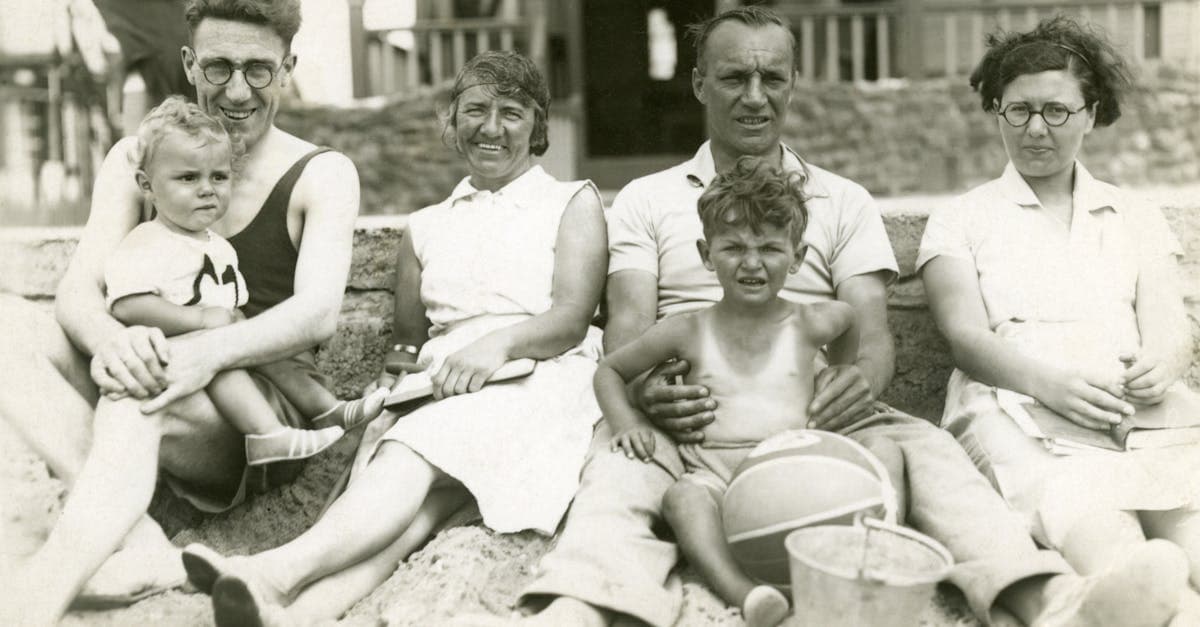
The 1930s is the decade of the Farm Security Administration photographers, of the first Kodachrome slide (1935), and of the last generation of photographs taken before the world reshaped itself in the Second World War. It is a decade whose surviving images carry extraordinary documentary weight because so much of what they recorded — the rural America of dust bowls and tenant farms, the European cities that would be bombed a decade later, the family lives of people who would soon be separated by war — was about to disappear.
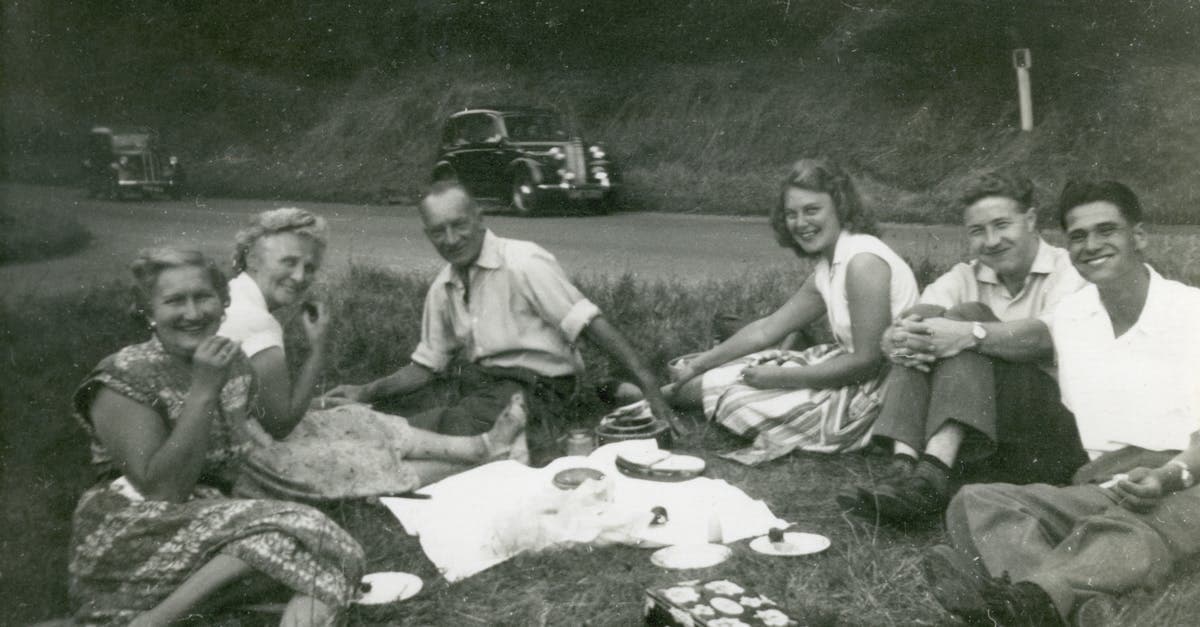
Family photographs from the 1930s have a very particular look: the contrast is crisp, the tones are neutral, and the compositions are more confident than in the previous decade. Cameras were better, film was faster, and photographers had a decade of snapshot experience behind them. When these prints survive, they often look surprisingly modern until you notice the clothing.
How photographs were made in the 1930s
Gelatin silver panchromatic films replaced orthochromatic stocks during the 1930s, giving photographers the ability to record red tones (lipstick, brick, autumn foliage) that orthochromatic film rendered as black. Kodak introduced Kodachrome in 1935 as a motion picture film and in 1936 in 35mm still format, creating the first mass-market color transparency film. Early Kodachrome used the K-11 process and produced slides with the now-legendary dye stability — Kodachrome slides from the 1930s often look better today than color prints from the 1970s.
The Leica 35mm rangefinder, introduced in the 1920s, became serious professional equipment in the 1930s, and the FSA photographers — Dorothea Lange, Walker Evans, Arthur Rothstein — used 35mm and medium format to document the Depression. Most family photography, however, continued on 6x9 cm roll film through Kodak and Agfa folding cameras, contact-printed to small fiber-based silver gelatin prints.
What damage looks like on 1930s photos
B&W silver gelatin prints from the 1930s suffer from the same silver mirroring and yellowing that affects earlier decades, though the thicker, better-made papers of the period mean the damage is usually less severe than in 1900s material. Prints stored in glassine envelopes or acidic paper albums often show outgassing stains where the container itself has damaged the emulsion.
Early Kodachrome slides, in contrast, are remarkably stable. A 1937 Kodachrome that has been stored in the dark looks almost identical to a Kodachrome from 1980. The more common problem with 1930s slides is physical: the mounts have warped, the cover glass has cracked, or fungus has grown across the emulsion in humid storage. Any 1930s color material that is not Kodachrome — including experimental Agfacolor and Dufaycolor plates — shows significant dye fading because those early processes were not dye-stable.
What AI can restore on 1930s photos
The restore tool handles silver mirroring, tonal flattening, paper staining, and the light fungal marks that often appear on slides from humid climates. Because 1930s prints are usually structurally sound, restoration results tend to be excellent: the underlying detail is still there, it just needs to be lifted out of a century of chemical fog. Face-restore works well on the small contact prints typical of amateur 1930s photography, where faces often occupy only a few hundred pixels in a scan.
What AI cannot do: rebuild a slide whose dye layers have separated into visible streaks, recover content destroyed by active fungus, or restore a print that has been laminated (a common mistake made in the 1950s and 1960s to "protect" older family photos, which actually seals in moisture and accelerates decay).
Tips for scanning 1930s photos
Kodachrome slides need to be scanned on a dedicated film scanner or a flatbed with a high-quality transparency unit at 4000 DPI to capture the full resolution of the original — Kodachrome's grain is fine enough that lower resolutions lose detail. Remove slides from cardboard mounts only if the mount is actively damaging the emulsion; otherwise scan through the mount. For prints, 600 DPI is sufficient for standard reproduction and 1200 DPI for small contact prints. Clean the scanner glass before every session to avoid confusing dust artifacts with actual print damage.
How to restore a 1930s photo with PhotoFlip
Frequently Asked Questions
Kodachrome's dye stability is exceptional, so dark-stored slides from the 1930s often need only minor color balancing and dust removal. PhotoFlip's restore pipeline detects the high baseline quality and applies a gentler pass that preserves the characteristic Kodachrome color rendering rather than aggressively "correcting" it.
The AI analyzes grain structure, tonal distribution, and edge characteristics that distinguish authentic 1930s silver gelatin prints from modern reproductions. It handles them differently because authentic 1930s prints have known failure modes (silvering, warm fog) while modern reproductions do not, and restoring them the same way would produce unnatural results.
Storage conditions matter more than age. A 1935 print stored in an acidic glassine envelope will usually look worse than a 1925 print stored loose in a cool drawer, because the glassine outgasses sulfur compounds that accelerate silver mirroring. PhotoFlip can reverse most of this damage regardless of which decade the original belongs to.
Light surface fungus can be cleaned from a slide by a conservator before scanning, and PhotoFlip can fill in the remaining marks during restoration. Active fungus that has eaten through the emulsion layer cannot be recovered because the image information beneath it is physically gone — but PhotoFlip can often reconstruct faces and key details plausibly using the surviving context.
Sources
Restore photos from other decades


Ready to restore a photo from the 1930s?
Free preview, no account needed. Download it in full resolution with a free account.
Upload a photo